Fervo Energy reported $11.9 billion in contracted revenue in its third-quarter earnings, up from $7.2 billion the previous quarter. The geothermal company is building projects for growing electricity demand from AI data centers, including a 396-megawatt plant for Google in Utah that it expects to complete by the end of 2028.
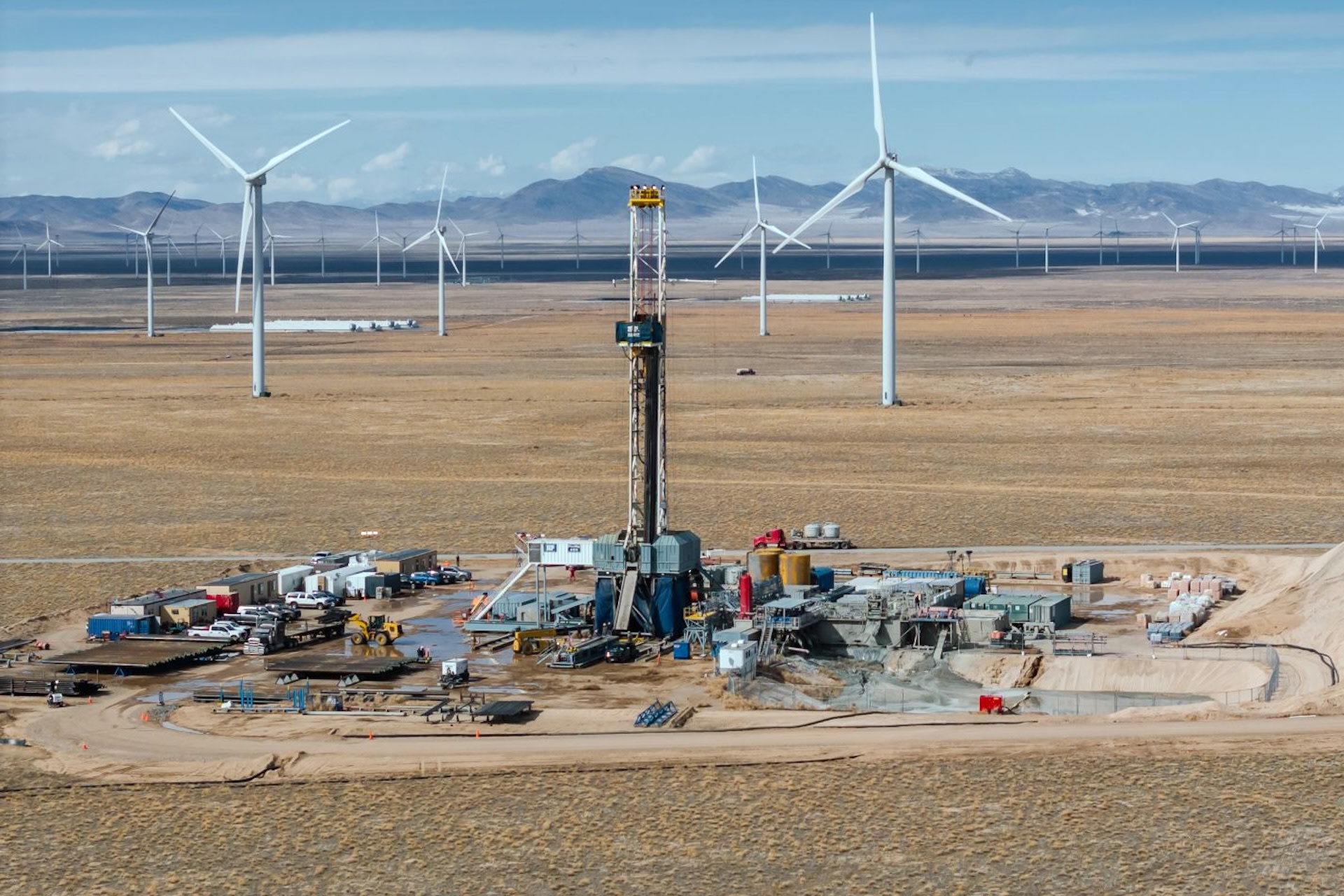
Fervo connected its first 100-megawatt power plant to the grid earlier this year. That facility and the Google project are part of Cape Station, a Utah geothermal resource the company says could generate 8.4 gigawatts. Experts had previously estimated the site’s potential at about 4 gigawatts.
The Google project, now called Cape Google 400, will connect to the grid, co-founder and CEO Tim Latimer said on an earnings call Monday. Google can draw power from the deal and sell it to other customers if it is not ready to use the electricity. “We build Cape Station on our schedule. Google can develop a potential data center on their schedule, and neither party is waiting on the other,” Latimer said.
Fervo is building its newer wells deeper and hotter, with each capable of generating 15 megawatts of gross power. The wells are grouped into units called GeoBlocks. The first completed GeoBlock generated 33 megawatts; more recent ones have reached 50 megawatts. Fervo says the blocks are sized for a typical data center hall, allowing customers to bring them online as construction progresses.
The company remains in an early business stage. It reported a $43.7 million operating loss for the quarter, with $1.9 billion in cash and cash equivalents and $301.6 million in long-term debt.
Costs will be central to Fervo’s prospects. The company said the first phase of Cape Station cost $7,000 per kilowatt of capacity, compared with $5,500 per kilowatt for the Google project. With subsidies, the latter is roughly equivalent to a new natural-gas plant using fuel priced at $6 per million BTUs, though that remains about twice the current cost of natural gas. Fervo’s long-term target is $3,000 per kilowatt, a level that could make its power cheaper than natural gas even at today’s prices.

Comments (0)
No comments yet. Be the first!