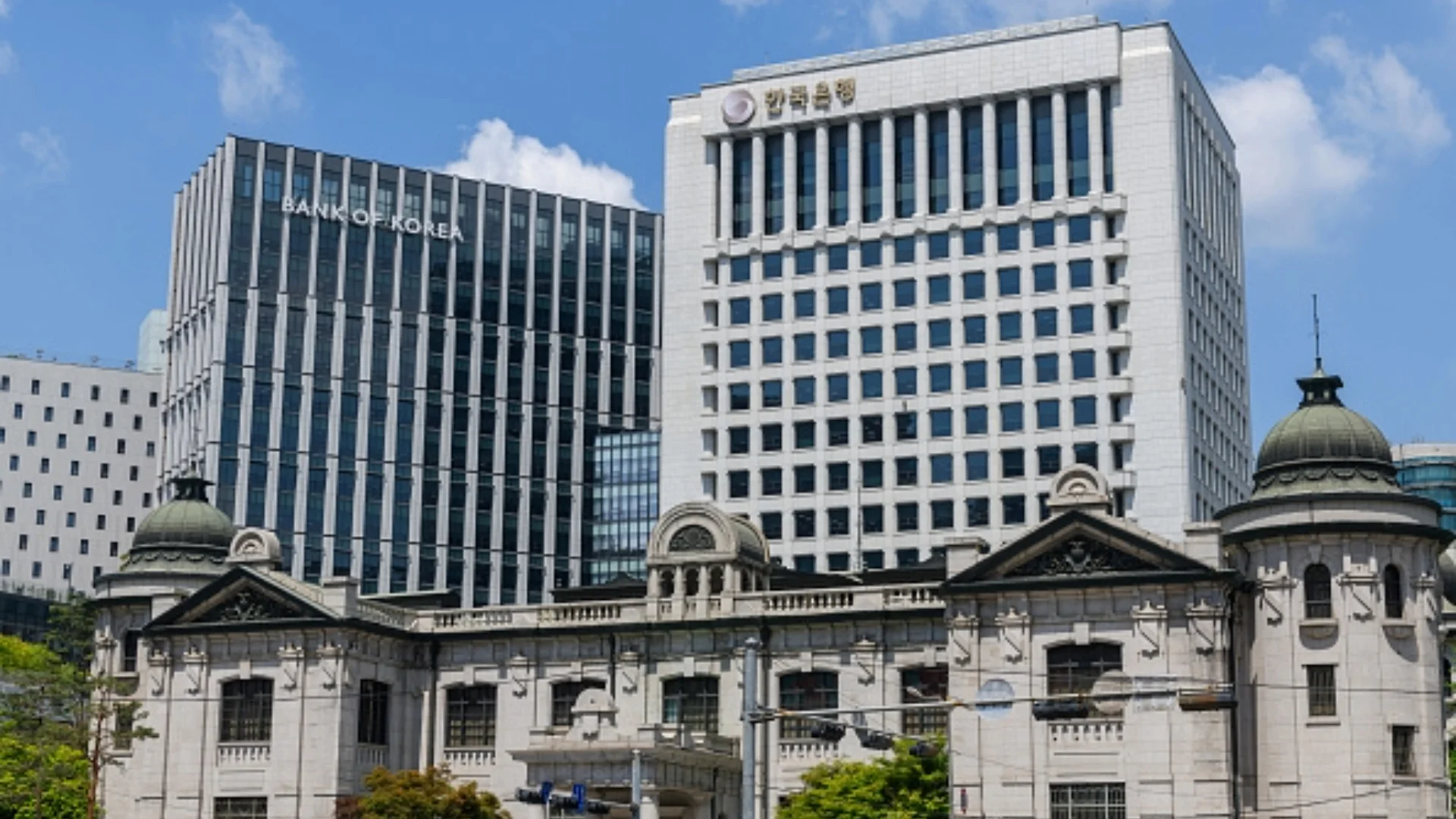
South Korea’s central bank lifted its benchmark rate by a quarter point to 3.25% on Thursday, its third increase this year, as stronger growth prospects and inflation above target kept further tightening in view. The decision came at the Bank of Korea’s final rate-setting meeting of the year.
The move matched expectations from 23 of 25 economists surveyed by The Wall Street Journal. The vote was split: five board members supported the increase and two favored holding rates steady. All members’ projections left room for additional increases over the next six months.
A surge in global investment in artificial intelligence has boosted South Korean semiconductor exports to record levels. The country’s exports exceeded $1 trillion so far this year for the first time, according to trade ministry data last week. But policymakers are watching whether gains in the chip sector spread to households and lift domestic demand, adding to inflationary pressure.
Governor Shin Hyun-song said the AI boom could take time to support private consumption through employee bonuses, dividends and other financial gains. He forecast consumption growth of 2.4% next year, faster than this year, and estimated that local chipmakers’ combined operating profits would reach 700 trillion won, or $520.98 billion, this year. Shin said the bank would continue working to return inflation to its target, which he expects to reach in 2028.
The BOK raised its growth forecast to 3.9% for 2026 and 4.1% for 2027, from August projections of 3.3% and 2.9%. It expects headline inflation to average 2.7% this year and 2.4% next year; both are above its 2% target. Core inflation is projected at 2.6% in both 2026 and 2027, up from earlier estimates of 2.5% for each year.
Economists differ on whether more rate increases are needed. Capital Economics’ Gareth Leather expects inflation to move back toward target early next year, arguing that productivity gains and growth concentrated in capital-intensive sectors have contained domestic price pressures. Moody’s Analytics economist John Bromhead said the bank could pause after raising rates by 75 basis points since July, but added that the growth upgrade made it harder to declare the tightening cycle over. A stronger-than-expected rise in inflation or domestic demand could put a hike in early 2027 back on the table, he said.

Comments (0)
No comments yet. Be the first!