
The new update to the Anatomage Table, based on World Health Organization and CDC classifications, moves beyond superficial representation. The software now visualizes complex internal changes, including muscle hypertrophy, myosteatosis, and organ displacement caused by visceral fat. By incorporating data from medical imaging, the platform illustrates how obesity alters metabolic functions, such as those seen in steatotic liver disease and polyendocrine metabolic ovarian syndrome.
In section Releases
Anatomage Expands Medical Training with Real-Life Obesity Models
One in eight people worldwide lives with obesity, yet medical education often relies on standardized, healthy models. Anatomage is closing this gap by integrating Class I and Class III obesity reference bodies into its 3D visualization platform, allowing students to study the internal physiological impact of the condition.
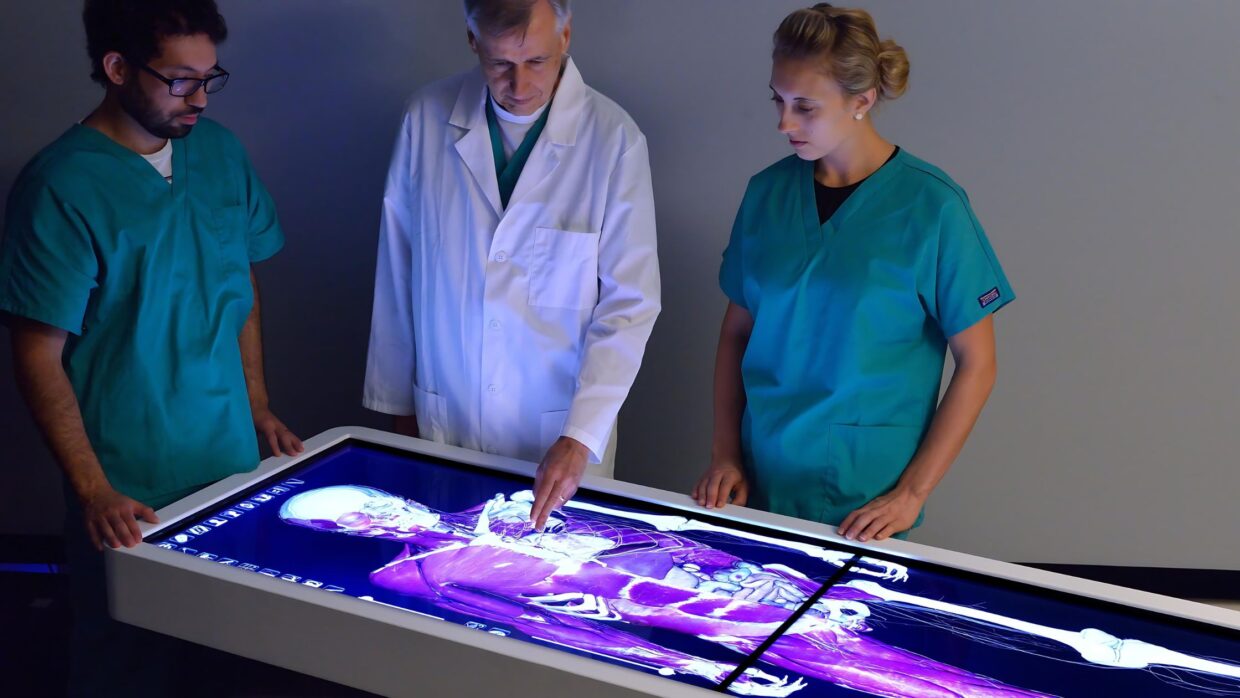
Beyond body composition, the platform enhances functional training with granular physiological simulations. Students can now observe the mechanics of swallowing through 50 distinct structures or monitor brain activity and airway collapse during obstructive sleep apnea. These features bridge the divide between theoretical anatomy and clinical practice, offering a multidimensional view of the human body. The update further expands the library with nearly 200 histology slides, new ultrasound simulations, and HiP-CT imaging, providing a comprehensive toolkit for medical students to examine natural variations and pathological changes in a single, interactive environment.
Comments (0)
No comments yet. Be the first!